
How to Negotiate Your Appraisal Without Burning Any Bridges
A plain-spoken guide to asking for more — and staying respected whatever the answer
Go in with documented evidence — specific results, numbers, and comparisons to your job description — rather than personal need or emotion, because facts are easier to discuss without ego getting involved. Frame the conversation as a question ('I'd love your input on what would move me to the next level') rather than a demand, which keeps your manager in the role of ally rather than adversary. Agree on a clear next step before you leave the room, even if the answer is not immediate, so the conversation has a natural follow-up that doesn't feel like chasing. Done this way, a well-prepared appraisal negotiation almost always strengthens the relationship because it signals maturity, not entitlement.
Get the guide — freeWhat's inside
Plus 2 fill-in worksheets and a 12-step action checklist.
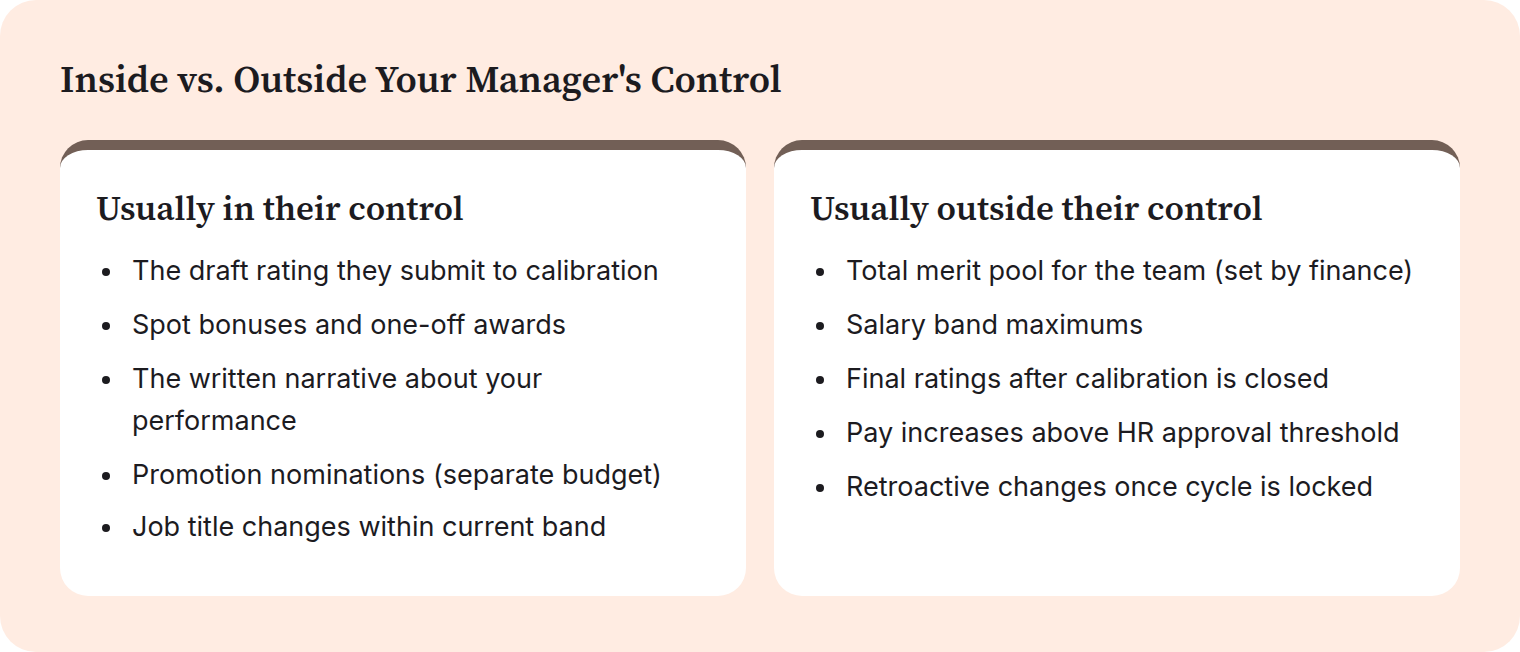
A page from the guide
Who it's for
An employee approaching their annual performance review who wants a pay rise or better rating but is nervous about damaging their relationship with their manager. They are sitting on evidence that they deserve more — a stronger performance record, market salary data, or a promotion-level workload — but they are afraid that asking directly will come across as aggressive, ungrateful, or naïve. They worry their manager will remember the conversation negatively when future opportunities arise, so they are looking for a way to advocate for themselves that feels safe and professional.