How to Make Healthier Lifestyle Choices cover
The full guide · 23 pages · PDF

How to Make Healthier Lifestyle Choices

A practical guide for people who've tried before and are ready to try differently

Start with one small change at a time rather than overhauling everything at once — research consistently shows that layering one habit on top of an existing routine (called habit stacking) makes it stick far longer than a full reset. Pick the single area that is costing you the most — poor sleep, daily movement, or what you eat for breakfast — and make one specific, measurable swap this week. Track it for two weeks before adding anything else. Progress that feels boring is the kind that actually lasts.

Get the guide — free

What's inside

01
Your Baseline Audit: Where You Actually Stand Right Now
Score yourself across five areas — sleep, movement, food, stress, hydration — before changing anything.
02
How Habits Actually Form: The Loop You're Already Using
Willpower is a depleting resource. Habits are automatic and cost nothing once formed — that's why they matter more.
03
Three Worked Scenarios: Real Lives, Real Numbers
7,000 steps a day is achievable from a desk job with parking changes, a lunch walk, and one evening walk — no gym needed.
04
The Minimum Effective Dose: The Smallest Amounts That Actually Work
7 hours of sleep is the evidence-backed floor. Below 6 consistently, health risks rise — and you won't feel as impaired as you are.
05
Your 30-Day Habit Stack Planner
Pick 1–3 habits maximum. Assign each a specific cue and an immediate reward before you start tracking.
06
Troubleshooting: When Motivation Drops, Life Blows Up, or Nothing Seems to Work
Motivation dips at weeks 3–4 for almost everyone. It's not a sign something is wrong — it's a sign you're normal. Shrink the habit rather than stopping it.

Plus 2 fill-in worksheets and a 12-step action checklist.

A page from the guide
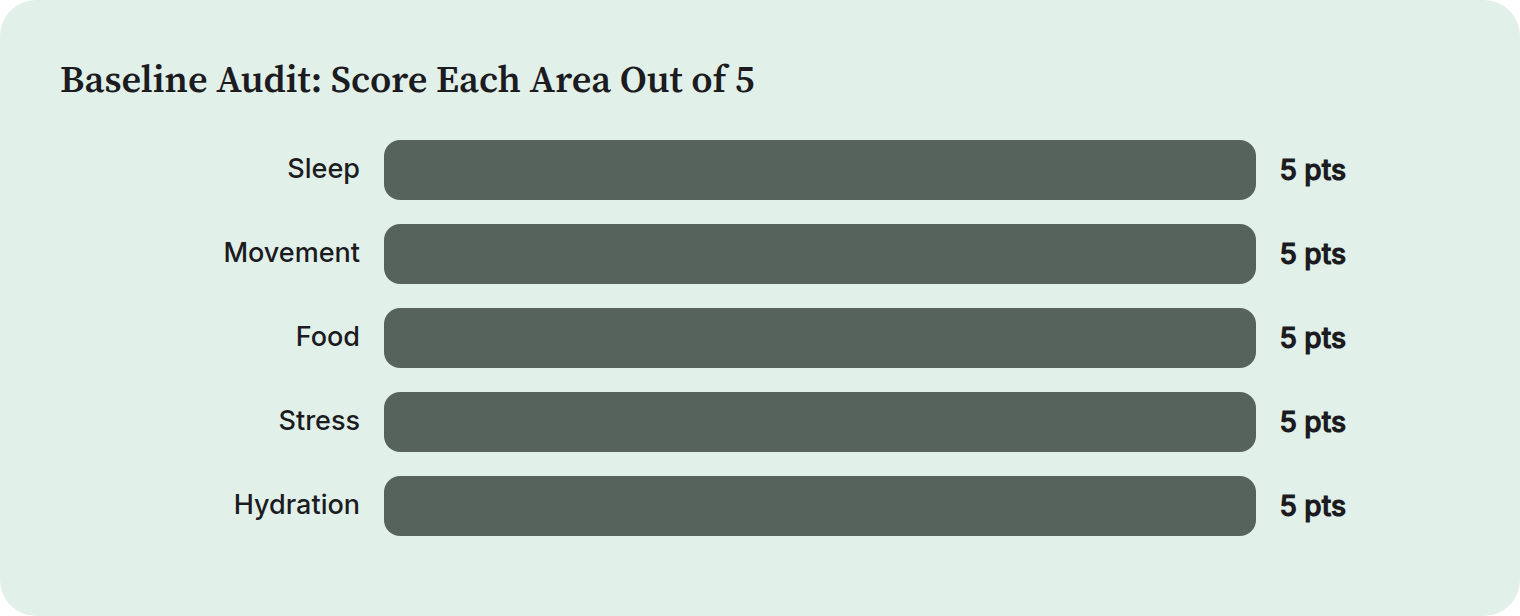
Infographic from the guide

Who it's for

An adult in their 30s or 40s who has tried diets and wellness routines before, failed to stick with them, and is now searching for a practical starting point that doesn't feel overwhelming. They know they eat too much processed food, move too little, and sleep badly, but every time they try to fix it they either go too hard and burn out or feel so guilty about slipping up that they quit entirely. They are worried that they simply lack willpower or that a healthy lifestyle is only realistic for people with more time and money than they have.

Questions

How long before I actually see physical results?
For most people, meaningful changes — better energy, improved sleep quality, a few pounds — show up in four to six weeks of consistent behavior. Biochemical changes like lower fasting blood sugar can start within two weeks even before the scale moves.
Do I really need to count calories?
Not necessarily. A more useful starting point is logging what you eat for five days without changing anything, just to see what's actually there. Most people spot one or two obvious swaps — a daily 500-calorie drink, a late-night snack pattern — without needing a precise budget.
Is walking really enough, or do I need 'real' exercise?
Walking is real exercise. Step count is one of the strongest single predictors of long-term health outcomes in the longevity research. If you want to add strength training later, great — but consistent walking is a solid foundation, not a consolation prize.
How do I handle restaurants and work events without derailing everything?
Pick one flexible rule you can apply anywhere — always include a protein-containing item, or cap alcohol at two drinks. One adaptable rule beats a rigid forbidden-foods list, which fails the moment you're at a wedding buffet.
What if I genuinely don't have time or money to eat healthier?
Start smaller than cooking. The first move might just be swapping one item on your existing grocery list — Greek yogurt instead of flavored yogurt, pre-washed greens instead of nothing. Cooking from scratch is a skill to build later, not a prerequisite.