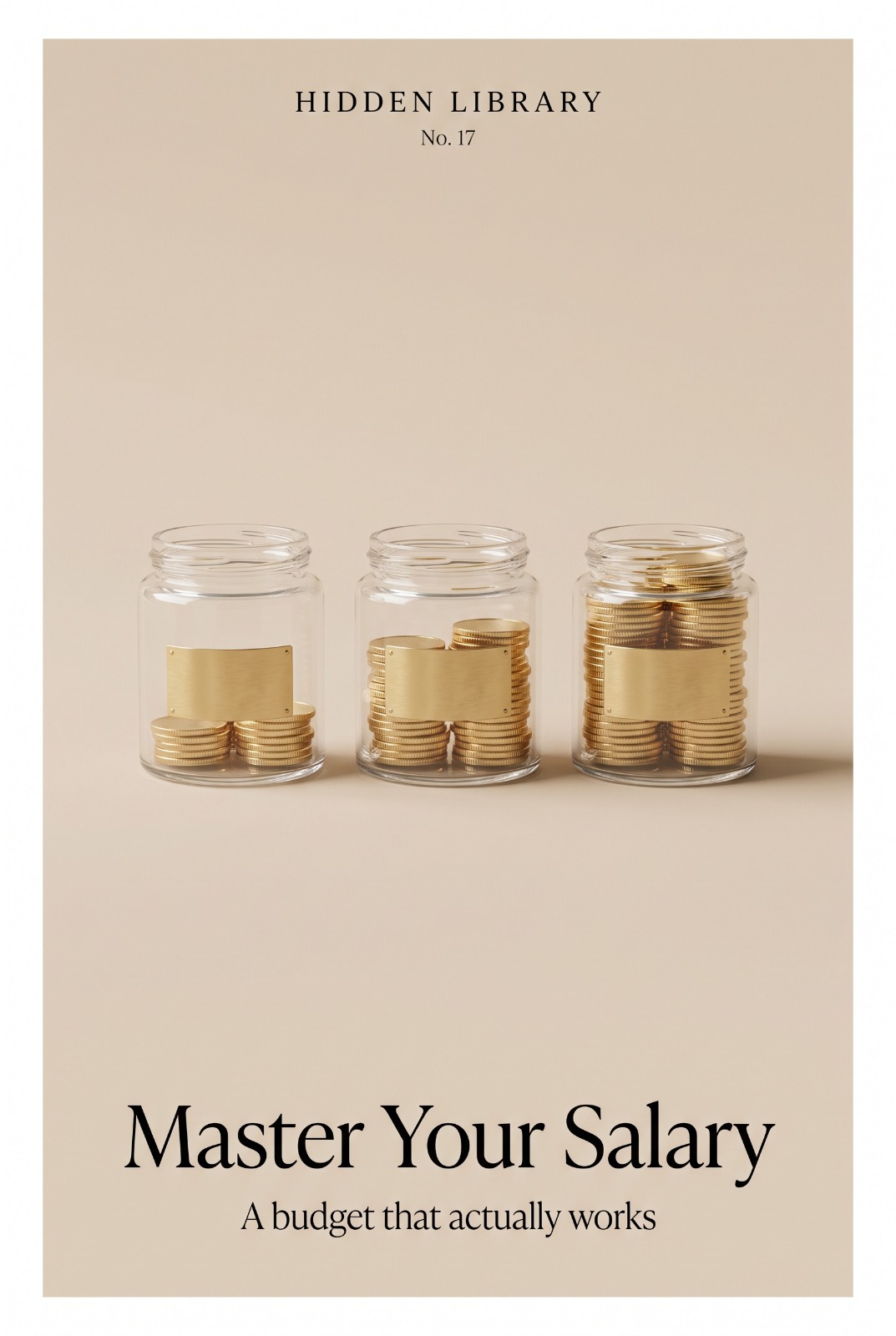
Stop Living Paycheck to Paycheck Starting This Month cover
The full guide · 22 pages · PDF

Stop Living Paycheck to Paycheck Starting This Month

For anyone earning a monthly salary who wants a simple, proven system to budget smarter and build real savings.

Write down your exact take-home salary, then immediately assign every pound or dollar a job before you spend a single one — rent, bills, groceries, savings, and fun money each get a fixed slice. The simplest starting split is 50% on needs, 30% on wants, and 20% on savings or debt. Set up automatic transfers to savings on payday so the money moves before you can touch it. Review what you actually spent at the end of the month, adjust the slices once, and repeat.

Get the guide — free

Who it's for

A salaried worker in their 20s or 30s who gets paid monthly and consistently runs out of money before the next payday. They receive their full monthly salary at once, feel financially comfortable for the first week, then watch it disappear without knowing where it went. They are worried they will never be able to save, build an emergency fund, or stop the cycle of anxiety that builds in the last week of every month.

Questions

What if my take-home pay varies slightly each month?
Base your budget on the lowest amount you expect in a typical month. If you earn more, the extra goes straight to savings before it touches your spending categories. Your plan never breaks; it only occasionally gets a bonus.
Is 20% savings realistic when rent is so high?
For many people in expensive cities, 20% is not achievable right now, and pretending otherwise leads to failure and guilt. Start with whatever you can actually hit — even 5% automated beats 20% intended. Increase it by 1-2% every few months as your situation shifts.
Should I use a budgeting app or is a spreadsheet fine?
Either works. The best tool is the one you will actually open. A spreadsheet with four columns — category, budgeted, actual, difference — does everything most people need. Apps like Monzo or YNAB are good options, but none of them will budget for you automatically.
Where should I keep my savings so I am not tempted to dip into them?
A separate savings account at a different bank from your current account creates just enough friction to stop impulse withdrawals. A high-yield easy-access account means your money earns something while you build it up.
How long before I actually feel the difference?
Most people notice the end-of-month anxiety reduce within two or three months. Having even one month of expenses saved tends to be the moment the psychological pressure of payday-to-payday living starts to lift.