How Do I Structure My Finances When Transitioning from a W2 Job to Full-Time Freelancing Without Losing Health Insurance or Retirement Contributions?
Bridge health insurance in 60 days, open a retirement account before year-end, and set aside 25–30% of every payment for taxes. Here's exactly how.
Short answer
Bridge health insurance immediately with COBRA, a spouse's plan, or an ACA marketplace plan — premiums for a single adult typically run $400–$700 a month. Open a SEP-IRA or Solo 401(k) before the end of your first tax year so you can shelter up to 20–25 percent of net self-employment income. Set aside 25–30 percent of every client payment into a dedicated savings account to cover self-employment tax and quarterly estimated payments. Do those three things in the first 60 days and the worst gaps are already closed.
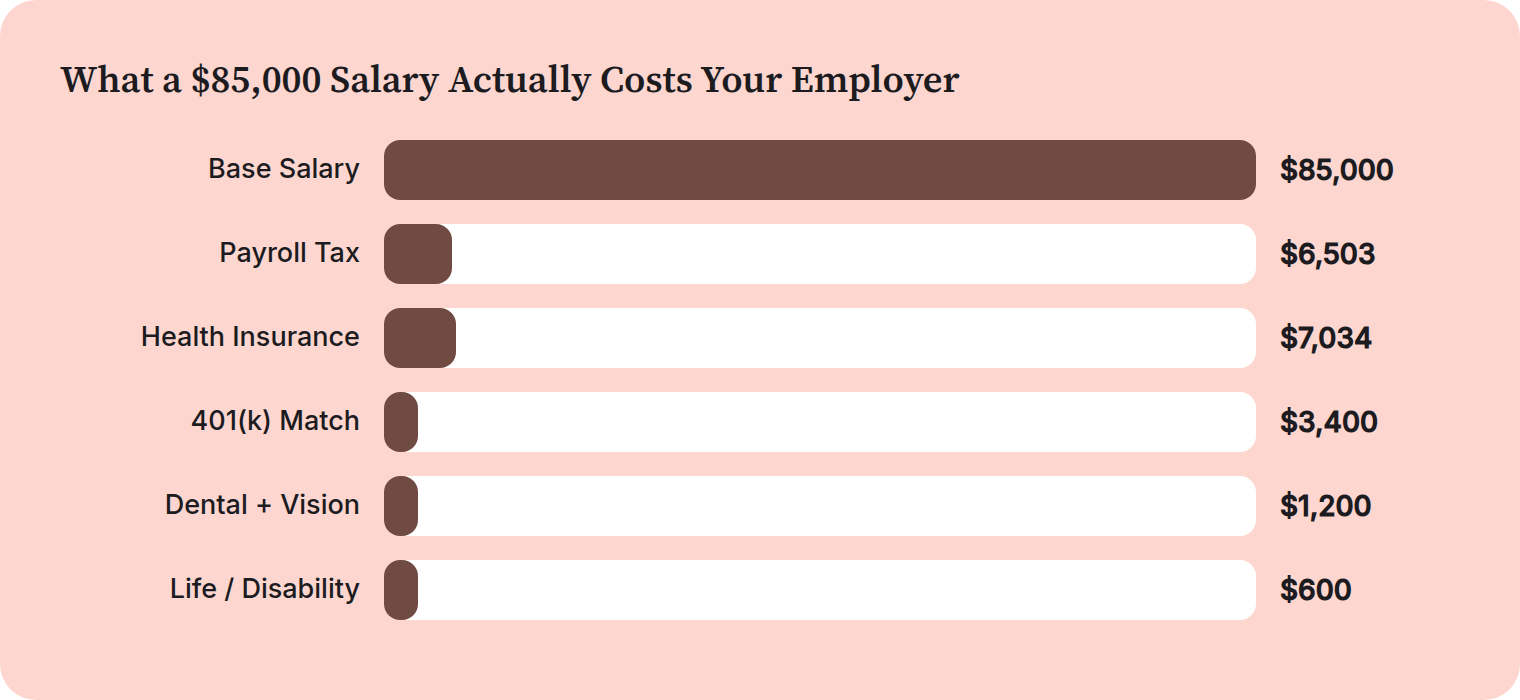
The day you decide to quit, something quietly terrifying happens. You realize your employer has been paying for things you never had to think about — health insurance premiums, a chunk of your Social Security and Medicare taxes, maybe a 401(k) match. It wasn't generosity. It was compensation, just the invisible kind. A $90,000 salary often costs an employer closer to $105,000 once benefits are added. As a freelancer, that gap lands on you.
Health Insurance: Your Three Real Options in the First 60 Days
Leaving a job is a qualifying life event, which gives you roughly 60 days to get coverage sorted. Miss that window and you're waiting until open enrollment.
COBRA
COBRA keeps you on your old employer's exact plan — same network, same deductible. The catch: you now pay both your share and the employer's share plus a 2 percent fee. A plan that cost you $200 a month can jump to $650. It's a reasonable stopgap for a month or two while you comparison shop, but it's expensive as a permanent solution.
ACA Marketplace
Healthcare.gov is worth your time. If your projected income falls between 100 and 400 percent of the federal poverty level — roughly $14,580 to $58,320 for a single person in 2024 — premium tax credits can cut your cost significantly. A silver plan for a healthy 38-year-old might run $480 before credits and $190 after. Estimate your income conservatively; you can owe credits back at tax time if you earn more than expected.
A Spouse's Plan
If your partner has employer coverage, your job loss qualifies as a special enrollment event. This is often the cheapest and simplest path. Call their HR department the week you resign.
Retirement Without a Company Match
You have two good options: a SEP-IRA or a Solo 401(k). A SEP-IRA is the simpler one — any brokerage opens it in 20 minutes, and you can contribute up to 25 percent of net self-employment income. A Solo 401(k) has a higher ceiling early on because you contribute as both employee and employer. As the employee, you can defer up to $23,000. As the employer, you can add another 25 percent of net income on top of that.
Concrete example: net $80,000 in year one, and a Solo 401(k) lets you shelter roughly $37,000 from federal income tax — the $23,000 employee deferral plus about $14,000 on the employer side. That's meaningful. Open the account before December 31st of the tax year you want to use it. SEP-IRAs have until your filing deadline, including extensions, but don't let that flexibility become procrastination.
The Self-Employment Tax Surprise
As a W2 employee, you paid 7.65 percent toward Social Security and Medicare. Your employer paid a matching 7.65 percent. As a freelancer, you pay both sides: 15.3 percent on the first $168,600 of net earnings in 2024, before income tax applies. You can deduct half of it from gross income, which softens the blow — but a $5,000 client payment is really closer to $3,500–$3,750 after tax reserves. Spending as if you made $5,000 is exactly how people end up scrambling in April.
Quarterly Estimated Taxes: A Simple System
The IRS expects payment as you earn. The 2024 due dates are April 15, June 17, September 16, and January 15. The safe harbor rule makes this manageable: pay at least 100 percent of last year's tax liability in quarterly installments (110 percent if your prior-year AGI exceeded $150,000) and the IRS won't penalize you even if you owe more at filing. In your first freelance year, last year's W2 tax bill is the benchmark — divide by four and pay that amount each quarter.
I'd treat this like an automatic payroll system. Every time a client pays you, move 25–30 percent into a separate high-yield savings account the same day. Label it Tax Reserve. When a due date arrives, pay via IRS Direct Pay. The money is already sitting there.
The Mistake That Sinks People in Month Three
The pattern is predictable: strong January, two good clients, $12,000 invoiced. February slows. March slows more. April arrives with an $8,000 tax bill and an empty account. That money felt like income. It was partly a loan from the IRS.
The fix is two separate accounts from day one — business checking for revenue and expenses, tax reserve account that you do not treat as a checking account. The psychological barrier of moving money between accounts is low, but it works reliably.
Your First 60-Day Checklist
- Week 1: Enroll in COBRA as a stopgap, or add yourself to a spouse's plan using the qualifying event window. Do not let coverage lapse.
- Week 1–2: Visit healthcare.gov, enter your projected income, and compare ACA options to COBRA. If the marketplace plan is cheaper and your providers are in-network, plan to switch.
- Week 2: Open a business checking account and a separate high-yield savings account for taxes.
- Week 2–3: Open a Solo 401(k) or SEP-IRA at Fidelity, Vanguard, or Schwab. You don't have to fund it immediately — just open it before December 31st.
- Week 3: Calculate your safe harbor quarterly payment from last year's return. Schedule the first payment if it's due within 60 days.
- Week 3–4: Make the 25–30 percent tax transfer a reflex. Every payment hits business checking; the tax slice moves out within 24 hours.
- Week 6–8: Revisit health insurance. If ACA premiums beat COBRA and your providers are covered, make the switch before you've paid a second COBRA month.
The goal in the first 60 days isn't optimization. It's plugging the holes fast enough that nothing catastrophic happens while you figure out the rest.
Questions people also ask
Do I need an LLC to open a Solo 401(k) or SEP-IRA?
No. You can open either account as a sole proprietor using your Social Security number. A Solo 401(k) does require that you have no full-time employees other than yourself or a spouse.
What if I can't afford health insurance premiums in the first few months?
Check your ACA subsidy eligibility first — many new freelancers qualify for significant premium tax credits based on projected annual income. If income is very low in year one, you may qualify for Medicaid depending on your state's expansion status.
How do I handle the quarterly payment if I had a slow income month?
Pay the safe harbor amount regardless of what you earned that quarter. The safe harbor is based on last year's tax bill, not this year's income, so a slow month doesn't change what you owe the IRS for that period.
Should I set up an S-Corp right away to reduce self-employment tax?
Probably not in year one. S-Corp election pays off once you're consistently netting above $50,000–$60,000, because the administrative costs — payroll processing, separate filings — eat into the savings below that threshold.
Can I still contribute to a Roth IRA as a freelancer?
Yes, as long as you have net self-employment income and your modified AGI is below the Roth phase-out limits ($146,000 for single filers in 2024). A Roth IRA can work alongside a SEP-IRA or Solo 401(k), not instead of one.
The Full Guide
Keep Your Benefits While Escaping Your 9-to-5 For Good

- A 12-month cash flow template that automatically separates operating income, tax reserve, and retirement contributions as you enter client payments
- Three worked scenarios — solo freelancer, freelancing spouse on a partner's plan, and high-income consultant eyeing S-Corp — with exact contribution and tax numbers for each
- A side-by-side ACA vs. COBRA decision worksheet with a built-in break-even calculator you fill in with your own premium quotes